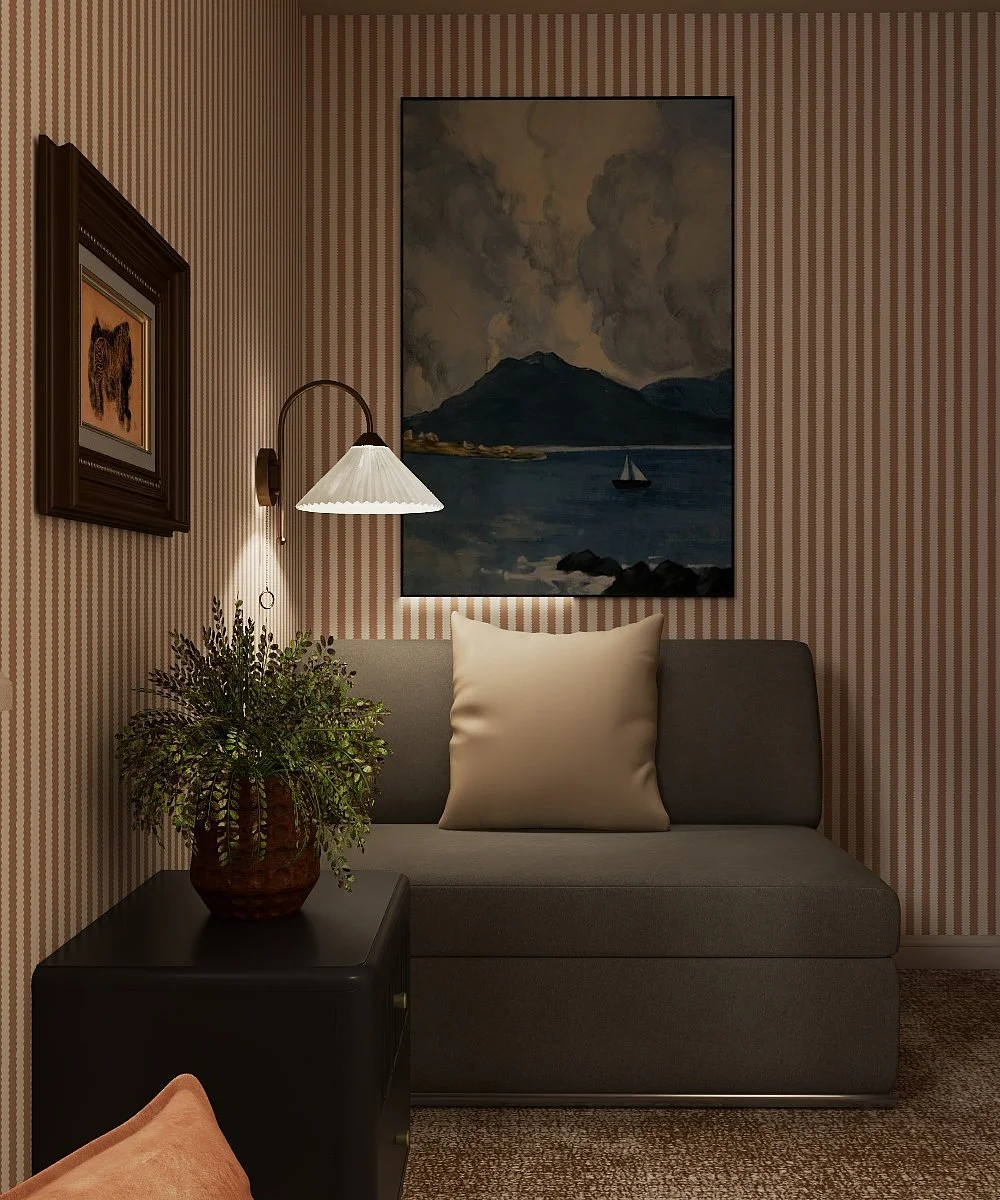
A small spare bedroom with plaster pink striped wallpaper, a brass wall light above a black side table, and a large seascape.
Furnish a small spare bedroom by getting as much as you can off the floor and onto the walls. A wall light instead of a bedside lamp, a narrow shelf instead of a dressing table, and a hook on the back of the door instead of the chair that ends up buried under coats. Choose furniture on legs so you can see the floor underneath, because visible floor is what makes a small room read as bigger than it is. Go large with the art rather than small. Then stand in the doorway and look at what you see first, because that view is what a guest forms their opinion on.
I've been working on a small spare bedroom recently. It's north facing, it already had a seat that converts to a single bed, and the floor area is what it is. Everything below came out of working round those three things.
Why does a small room need big art?
Small rooms get small pictures, and I think that's the wrong instinct.
A collection of little frames chops the wall into pieces and the room reads as busier and therefore smaller. One large piece does the opposite. It gives the eye a single thing to land on and the wall feels like one surface rather than several.
Go as large as the wall can take. If it looks slightly too big when you're holding it up, it's usually about right.
Where does the bedside light go if there's no room for a bedside table?
On the wall.
The seat in this room converts to a single bed, so there's nowhere to put a bedside table and no point pretending otherwise. A wall light solves it. It gives a guest something to read by and switch off without getting up, and it takes no floor at all.
It also means no trailing flex across the floor, which matters more in a room people don't know their way around in the dark.
Can you fit a dressing table in a small spare room?
Usually not, and I'd rather have a shelf.
A narrow shelf at the right height gives a guest somewhere to put their bits down and get ready. It does most of the job a dressing table does and it costs you nothing on the floor.
Put a mirror above it. In a north facing room the mirror earns its place twice over, because it bounces what light there is back into the room. If the room is north facing, what you put on the walls matters as much as the mirror.
Does furniture on legs make a room look bigger?
It does, and it's one of the cheapest tricks there is.
The scheme has a tan leather occasional chair on legs. You can see the floor running underneath it, so the eye reads the whole floor area rather than stopping at the furniture. A chair sitting flat to the ground blocks that, and the room shrinks.
Same with the floor lamp beside it. A tall, thin thing takes almost no floor but gives the corner some height, which stops everything in the room sitting at the same low level.
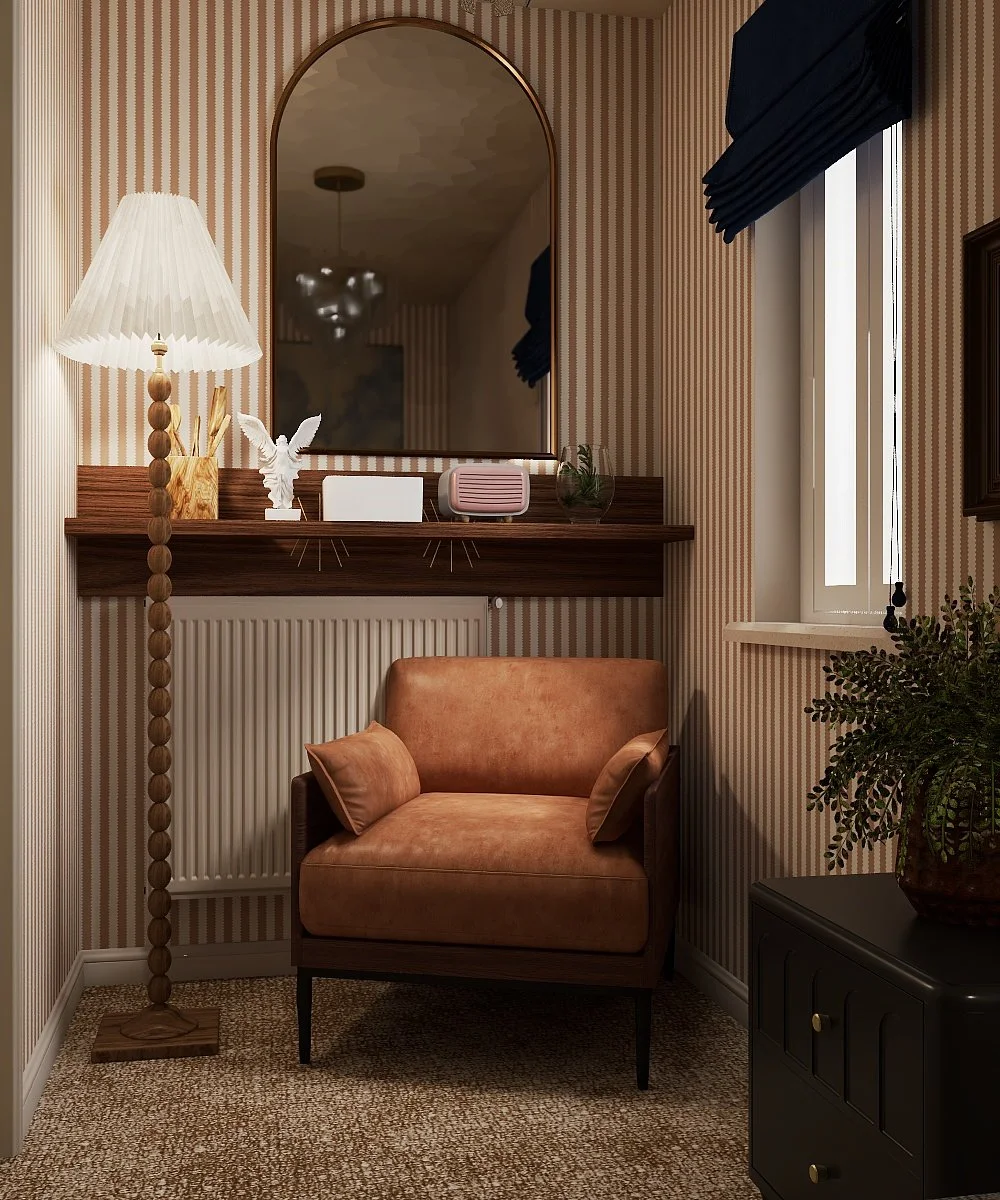
A shelf instead of a dressing table, and a chair you can see the floor beneath.
What do guests actually need in a spare room?
Somewhere to put their things.
People arrive with a coat, a bag, a dressing gown, and in a small room there's nowhere obvious for any of it. So it ends up on the bed or on the chair, and the room you designed disappears under it.
A wrought iron hook on the back of the door fixes most of that. It's a few pounds, it takes five minutes, and it's the thing guests use without being told.
What should a room look like from the doorway?
This is the part that gets skipped, and it's the view a guest sees most often.
Stand in the doorway and look. Whatever sits directly opposite is doing the heavy lifting, so that's where the considered thing goes. In this scheme it's a black side table by the window with art above it, which is also how the black gets into the room. I like to bring some black into a scheme somewhere, because without it everything can float.
And don't hang the art too high. It's the most common mistake I see, and it's an easy one to make when you're standing up with a hammer. Hang it for someone sitting down, not someone standing at the wall.
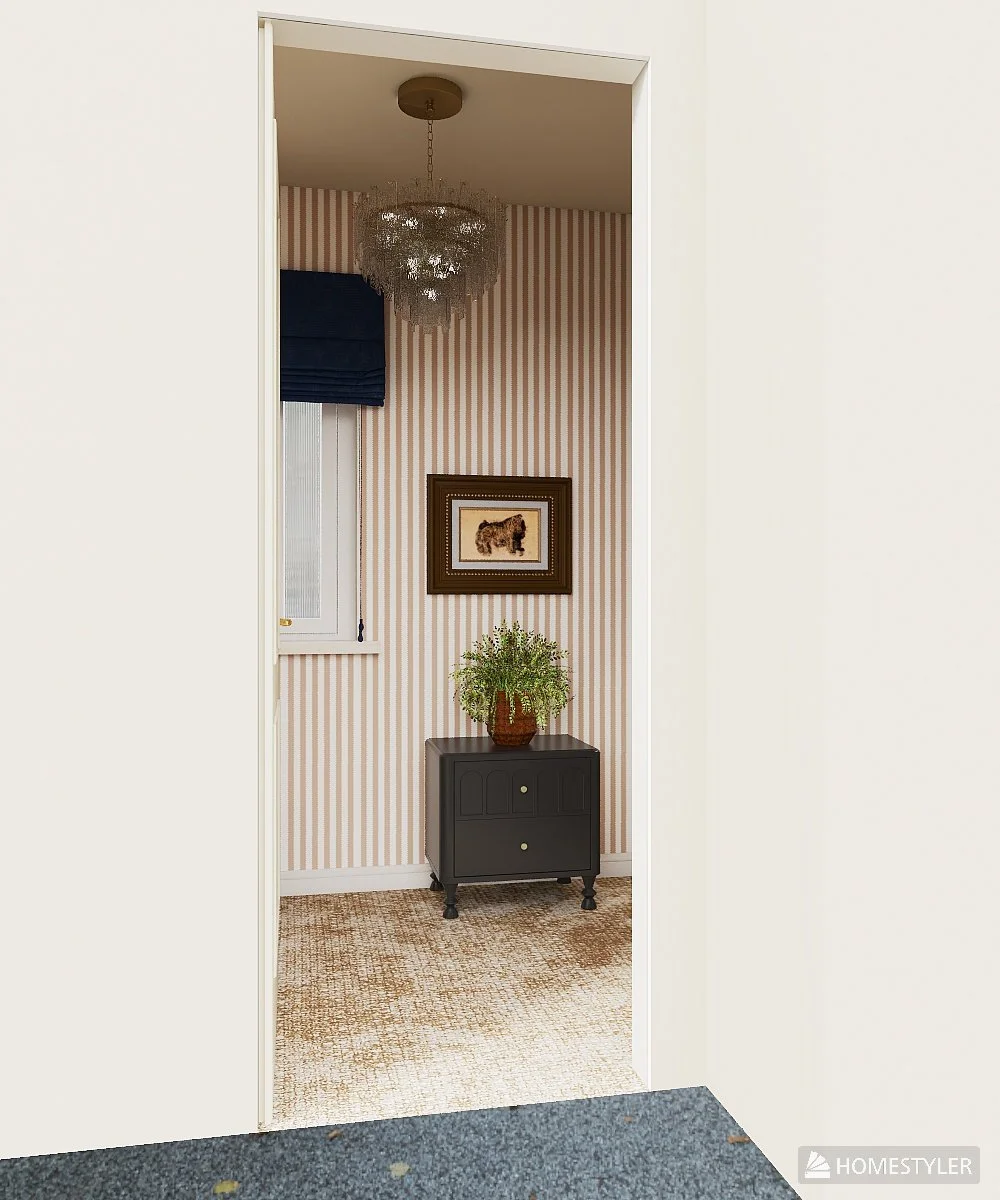
The view from the doorway. Whatever sits opposite is doing the work.
The starting point was the wallpaper
The scheme began with a plaster pink striped wallpaper - Elin Wallcovering Tuscan Pink by Romo. Everything else was chosen to sit against it, which is the order I'd always work in: pick the thing that sets the tone, then choose the rest around it.
What does it actually cost to work with an interior designer?
I've written a guide that gives you the real numbers: what a room costs, what a whole house costs, and what you're paying for at each stage. No ranges so wide they tell you nothing.
You'll also get my Sunday letter, where I write about one room at a time, usually whatever I'm in the middle of.
Common questions
What size art should go in a small bedroom? Larger than feels comfortable. One big piece reads as calmer than several small ones, because it keeps the wall as a single surface rather than breaking it up.
How high should art be hung? Lower than most people hang it. Aim for the centre of the piece at around eye level for someone sitting down, particularly in a bedroom where you're rarely standing at the wall.
Do you need a bedside table in a spare room? Not if there's no room for one. A wall light gives a guest the reading light and the switch, which is most of what a bedside table was doing, and it takes no floor.
How do you make a small guest room feel welcoming? Give people somewhere to put their things. A hook on the back of the door, a shelf, and a mirror cover almost everything a guest needs for a night or two.
What colour should a small north facing room be? Warm rather than white, for the same reason as any other north facing room. Cold light on a white wall reads grey, and the paint colour post goes into which colours work and how to test them.
If you've got a spare room you've been putting off and you're at the point of deciding what goes in it, book a free 30 minute intro call and we'll talk about working together on it.