How do you choose fabric for curtains?
Choose curtain fabric by looking at a large sample, hanging vertically, in the room it's going in, at the times of day you use that room. Ask for the biggest sample the supplier will send rather than a swatch, because a small flat piece tells you almost nothing about how a fabric behaves once it's gathered. Check the pattern against the size of the window, check how much the repeat will add to the metreage, and decide on lining and interlining at the same time as the cloth, not afterwards. The fabric price per metre is the number everyone looks at, and it's rarely the biggest number on the quote.
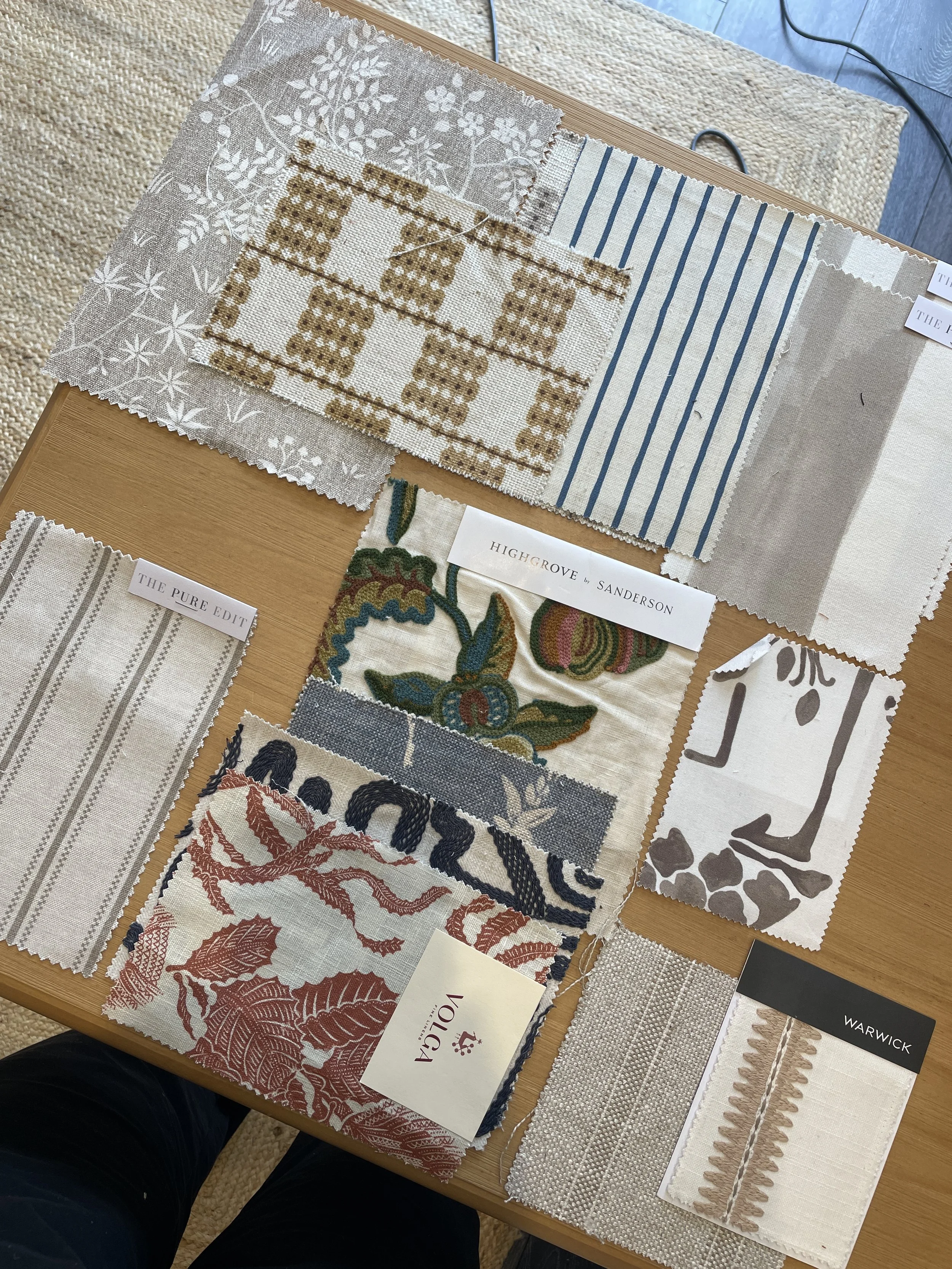
Fabric samples for a variety of uses in one room.
Why a small swatch misleads you
A swatch the size of a beer mat is flat, it's horizontal, and it's usually sitting on a table under a kitchen light. A curtain is none of those things.
Two things change when a fabric hangs. The colour deepens, because you're looking at folds and the shadow between them rather than a flat surface. And the pattern mostly disappears into those folds, so a design that looks busy in your hand can read almost plain at the window.
That's why the same fabric can be a yes in a shop and a no in your sitting room, and why people end up with curtains they never quite liked from the day they went up.
Ask for a bigger sample
Most suppliers will send something larger than a swatch if you ask, and many will loan a full returnable sample or a length for a few days. It's worth asking every time. A cutting big enough to gather in your hand is the minimum, and a half metre is better.
Then look at it the way you'll see the curtain. Hold it up at the window, let it fall, gather it in your hand so you can see what the folds do to the pattern and the colour. Stand back across the room rather than judging it at arm's length.
See it in the room, at the right times
Take the sample to the room it's for, and leave it there for a few days rather than deciding in one go.
Look at it in the morning and again in the late afternoon, and look at it in the evening with the lamps on, because that's when most people are actually sitting in the room. If the room faces north, the cold light will pull the blue out of anything that has blue in it, and the colour post goes into why that matters. If the room has warm lamps in it, as it should, the fabric will read warmer at night than it does at noon.
Check it against everything else in the room while you're there. The wall colour, the carpet or the floor, the sofa. A fabric chosen on its own is a fabric chosen against a white table.
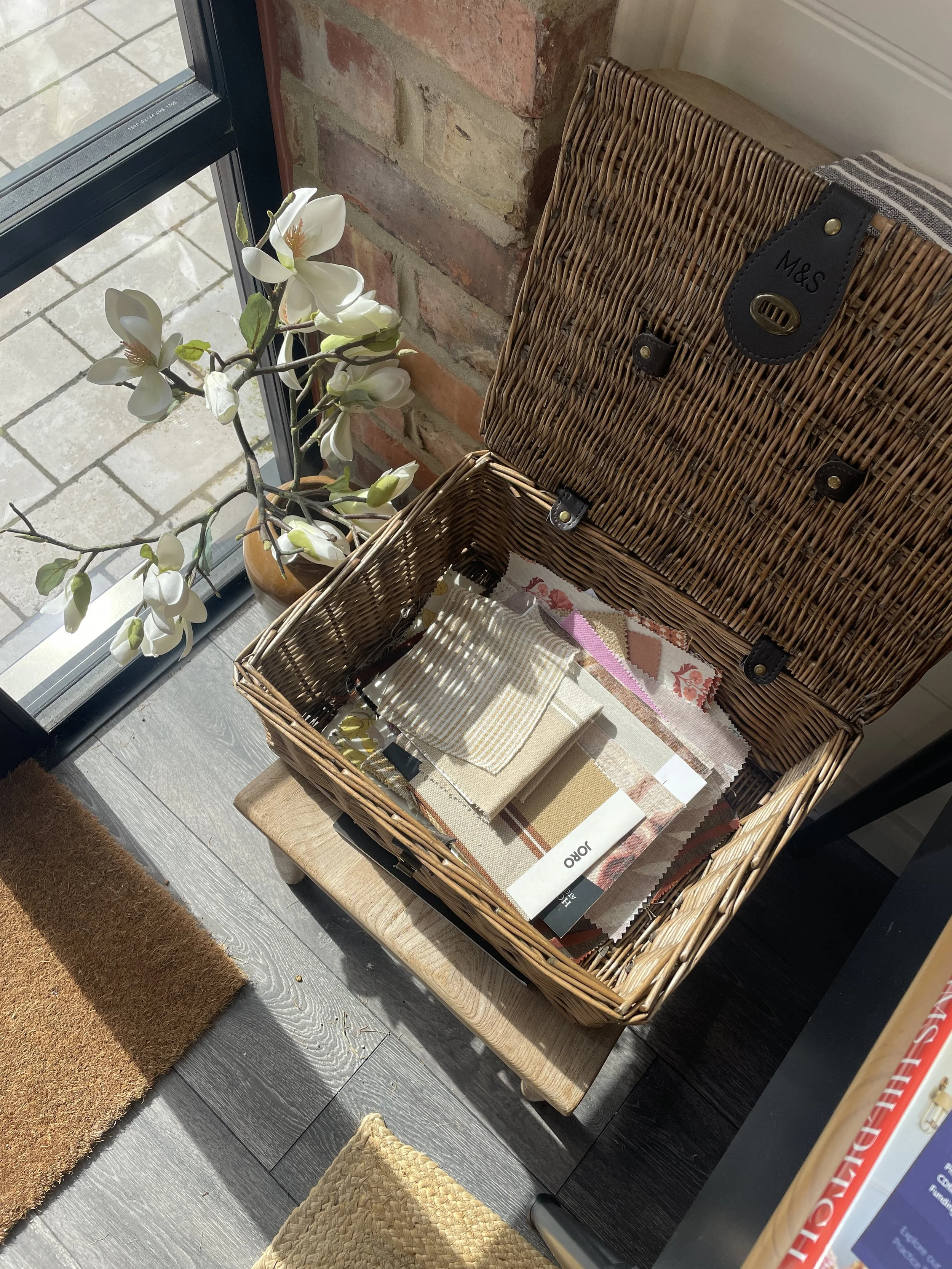
A hamper of samples on its way out.
Pattern, scale and what the repeat costs you
Look at the size of the pattern against the size of the window, not against the size of the sample.
A large design on a small window gets cut off, and you see fragments of it rather than the design. A small busy pattern on a tall window can look restless. If you want pattern but the room already has a lot going on, something tonal that reads almost plain from across the room is usually the better answer.
Then ask about the repeat. A fabric with a large pattern repeat needs extra length on every drop so the pattern lines up across the curtains, and that can add a surprising amount to the metreage. It's the part of a quote that catches people out, and it's worth knowing before you fall for the fabric rather than after.
Lining and interlining are part of the decision
Decide these with the fabric, not once the fabric is ordered.
Lining protects the cloth and gives you the finished look from the street. Interlining is the layer in between, and it's what gives curtains weight, how they hang, and most of their insulating value. It's the interlining that does the work in a cold room, not the weight of the face fabric, which is covered in more detail in the cold room post.
If the room gets strong sun, say so when you're choosing. Some fabrics fade badly and the right lining helps.
What does it actually cost to work with an interior designer?
I've written a guide that gives you the real numbers: what a room costs, what a whole house costs, and what you're paying for at each stage. No ranges so wide they tell you nothing.
You'll also get my Sunday letter, where I write about one room at a time, usually whatever I'm in the middle of at home.
Common questions
How big should a fabric sample be? Big enough to gather in your hand, and bigger still if you can get it. A small flat swatch shows you the colour and nothing about how the fabric hangs. Many suppliers loan larger returnable samples if you ask.
Does fabric look different once it's made into curtains? Yes. Colour deepens because you're seeing folds and shadow rather than a flat surface, and pattern softens because much of it disappears into the gathers. That's the single biggest reason people are disappointed by curtains they chose from a swatch.
What's the difference between lining and interlining? Lining is the backing layer. Interlining is a soft layer between the face fabric and the lining, and it's what gives curtains their weight, their hang and most of their insulating value.
Should I order all the fabric at once? Yes, and from the same batch. Fabric is dyed in runs and the colour can shift slightly between them. You won't see it on the roll and you will see it on two curtains hanging side by side.
Why is the quote so much more than the fabric? Because most of the cost is in everything else. Lining, interlining, the making up, the track or pole and the fitting. The price per metre is the figure people compare, and it's rarely the one that decides the total.
If you're at the point of ordering fabric for a room and you're not sure the one you've picked is right, book a free 30 minute intro call and we'll talk about working together on it.